← Somlai-Fischer archive

Kitchen Budapest

2007 Nyár / Summer — the lab’s first catalogue, powered by Magyar Telekom

Arbour Light

Arbour Light
■ Participating researcher / Résztvevő kutató ■ Bagi Tamás, Gálik Györgyi, Kovács Zoltán, Németh Péter, Papp Gábor, Sipos Melinda

A Fénylugas olyan intelligens világítórendszer, mely természetes környezeti jelenségeket reprodukál fény formájában. Egyrészről alternatívát nyújt a nem szöveg és kép alapú kapcsolatteremtéshez, másrészről különböző természetes jelenségek absztrakt közvetítésére tesz kísérletet.

Miért készült?

Távol lévő vagy már rögzített fényjelenségek megjelenítése az otthonunkban. A projekt célja a pontos ábrázolás helyett inkább a jelenség által keltett érzet visszaadása. A Lugas segítségével leképezett érzetek, látványok egyfajta metakommunikációt hoznak létre. Általuk kapcsolatba kerülünk más helyekkel, emberekkel, természeti jelenségekkel.

A Fénylugas egyben egy megvásárolható designtermékké kíván válni, személyre szabható „hangulatlámpa”, lakberendezési elem, ha úgy tetszik, mely meglévő digitális, kommunikációs eszközeink más jellegű használatára inspirál/épít.

Hogyan működik?

A rendszer működése fényátvitelen alapul. A videóformátumban rögzített vagy épp vett tetszőleges jelenség képe zónákra van osztva. A program ezekben a zónákban méri a fényerősséget és az adatokat folyamatosan továbbítja interneten keresztül a világító elemekhez. Minden elemnek van egy saját zónája, ahogyan a fény abban változik, az adott modul is úgy változtatja fényerősségét. A világító rendszer sínekből és modulokból áll. Tetszőleges számú sínre tetszőleges számú modul helyezhető. Soros kommunikáció van a modulok között, az áram- és adatellátás a rögzítősínen keresztül történik.

Arbour Light is an intelligent lighting system which reproduces phenomena of nature in a luminous form. It supports new forms of communication but it is also an attempt for the abstraction of such phenomena.

Our aim

Our aim is to display remote or recorded luminous phenomena in our homes focusing on the impression they make instead of a realistic reproduction. While it is a design object in our living space, a sort of "a standing lamp with subdued light", it provides an alternative communication facility between places and people.

How does it work?

This system is operated by the transmission of light via the internet. When a phenomenon is recorded by a video camera, the image is displayed by luminous modules. The image is divided into zones, in which a software is measuring light intensity and sending the data to the luminous modules via the internet. Each zone is connected with a module, which displays the alternating light intensity of the related zone. The modules are attached to rails which supply them with electric current and data.

Current state

Arbour Light is a prototype. The finished product will be a system consisting of 50-100 modules.
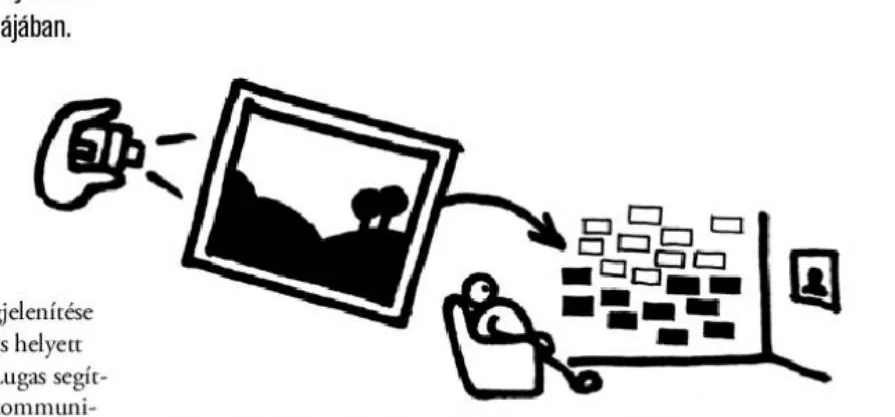
black doodle: hand pointing a lamp/projector at a framed landscape picture, arrow to a person in an armchair watching a wall of small rectangular light modules, small framed portrait on right

1. collecting phenomena of light

2. a software mesures the amount of light in the zones of the image of the video choosen and send the datas to the objects

3. the display is composed by lighting modules and the modules reflect the received values in real time

outlined person with camera on chest, dashed pink sight lines to a collage of small photos (sunset over buildings, blue sky with clouds, pedestrians' shadows, night street, petals on grass, tree shadows in park, sea waves)
grey outline drawing of a laptop, screen shows video frame overlaid with grid of small measurement-zone rectangles; pink arrow pointing to it; black marker scribble above
line-drawn room corner in perspective: wall covered with grid of glowing grey/white lighting modules on the left, doorway, two armchairs with small table and potted plant; pink dashed lines connecting laptop to module wall

a jelenségek "begyűjtése"

egy program segítségével zónákat helyezünk el a rögzitett videó képében és mérjük a zónában lévö fény értékét és változását

a kapott adatok interneten továbbítódnak a világító elemekhez, mindegyik elemnek megvan a maga zónája és az onnan kapott értékek szerinti fényerösséget bocsát ki
a jelenségekről készült videó helyszíne és a világítórendszer akár földrajzilag távol is eshet egymástól

outlined walking person with camera on chest, dashed pink sight lines toward collage of photos (night street, pedestrians' shadows, petals on grass, blue sky with clouds, sunset over buildings, tree shadows in park, sea waves)
grey outline laptop, screen showing video frame with grid of measurement-zone rectangles; large pink curved arrow from photo collage down to laptop
grey globe drawing with Budapest and Singapore marked, pink dashed arc between them, pink arrows in and out — data travelling geographically far

tetszőleges számú elemet tetszőleges formában helyezek el

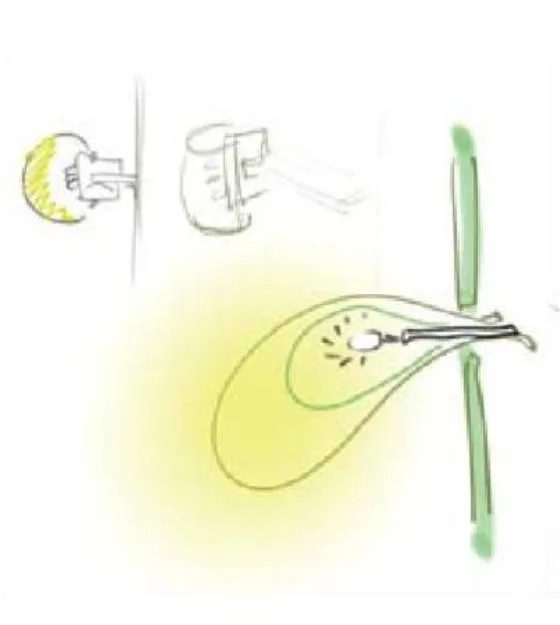
sketch: small drawings of wall-mounted module and bracket, yellow glowing drop-shaped lamp around a bulb on a green rail
three photos in a row: hands holding a glowing white cylindrical lamp module against a wall; hands bending a flexible white luminous sheet; a rolled luminous sheet forming a cylinder
photomontage: glowing horizontal lamp modules stacked loosely in a brick-like staggered arrangement
photomontage: glowing lamp modules arranged diagonally in parallel slanted rows
large rendering of a full wall of glowing rectangular modules with varying brightness (image displayed in light), pink arrow pointing at one module top-left

Restored from the original Kitchen Budapest project site — texts and images as published.