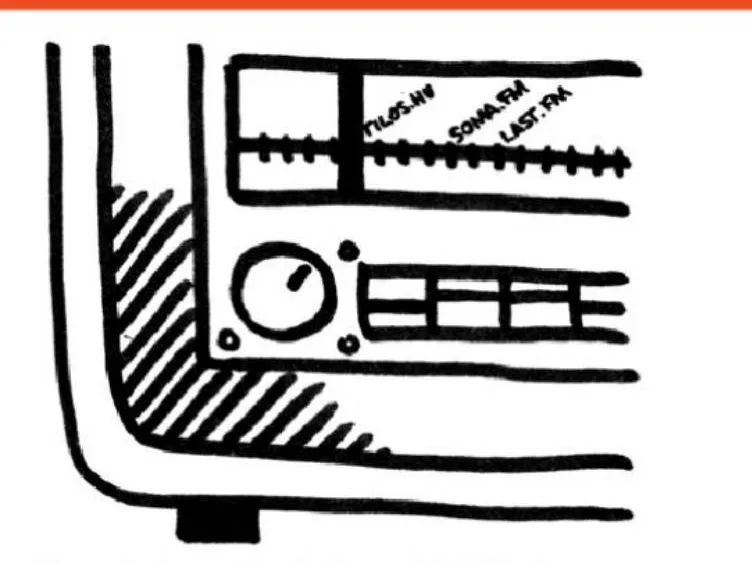
Azok, akik rajonganak a régi tárgyakért, és nehezen fogadják el a technika legmodernebb „csomagolását” otthonukban, vagy munkahelyükön, biztosan könnyebben tudnak kötődni egy régi, jól ismert köntösbe bújtatott újdonsághoz. Egy médiaszerver és wireless zenelejátszó régi, már nem használt, de mostanában ismét közkedvelt formában: egy ötvenéves világvevő rádióba rejtve. Ezután már valóban bejön rajta Budapest mellett London, Vatikán és Detroit, na meg a Last.fm meg bármi más. Mindezt úgy, hogy az eredeti kezelőket (sávkeresés, hullámhosszváltás) megtartjuk, észrevehetetlenül technológiát csempészünk mögé.
Miért készült?
Egy meglepő, de teljesen funkcionális tárgy létrehozása volt a célom. A doboz mintha az időn kívül létezne: egy ötvenéves rádió dobozában egy tízéves laptop a legkorszerűbb technológiát veszi igénybe, hogy ugyanúgy szóljon, ugyanúgy legyen használható, mint régen. Másik oldalról pedig egy menő zenelejátszóra volt szükségem, ami jól mutat a szobámban egy kisasztalon (igény szerint kisterítővel vagy porcelán őzikével).
Hogyan működik?
Úgy, ahogy egy régi rádió: egyik tekerővel a hangerőt állítod, a másikkal az állomások között keresel. A különbség csak annyi, hogy a gombok nem a hullámhosszok között váltanak, hanem különböző playlistek közt.
A rádió lelke egy régi számítógép, ami előző életében laptopként működött. A gombokat és tekerőket egy Arduino kezeli, a zenelejátszás a MusicPlayerDaemon feladata. Az internetre egy USB-s wifi donglival csatlakozik, az első nyitott hálózatot megkeresve. A rádiót egy webes felületen lehet beállítani: itt lehet hozzáadni kedvenc rádióállomásainkat vagy Last.Fm csatornánkat.
Those who love traditional objects and find it hard to accept modern technology may have a more intimate relationship with a novelty in the guise of an old-time object. We propose a media server combined with a wireless music player built into a 50-year-old universal radio receiver. With this, now you can truly get Budapest, London, the Vatican and Detroit, as well as, Last.fm and anything else your heart desires. While maintaining the original control functions, such as the station-search and the band-switch, we equip the old device with new technology imperceptibly.
Our aim
My aim was to create a curious-looking object, which is also a functional device. It is a 50-year-old wireless set, which hides a 10-year-old laptop using up-to-date technology, so that it can be used the same way and it sounds the same as in old times. On the other hand, it is a trendy music-player that looks good in your home (it can even be decorated with a small cloth and a china figurine).
How does it work?
It works like an old-fashioned radio, with the difference that changing radio stations is substituted for switching among play lists.
A worn-out computer constitutes the central unit of the radio. The buttons are controlled by a microcomputer, while music playing is done with the help of a Music Player Daemon. It connects with the internet through an USB wifi stick. You can set the radio and add your Last.fm or other favourite radio stations in a web environment.